
Mobile App Design and Development: What It Takes to Build an App That Actually Works
In today’s digital-first world, a mobile app can be far more than a nice extra. For many businesses, it becomes a powerful tool for sales, education, customer engagement, product demonstration, and brand growth. A well-built app does not just look polished in screenshots. It performs reliably, feels intuitive to users, and supports real business goals long after launch.
That is why mobile app design and development have to be approached strategically. A successful app requires more than a good idea and clean visuals. It requires thoughtful user experience planning, strong technical architecture, reliable development, testing, and a practical way to manage content over time.
Whether you are planning a customer-facing platform, a sales enablement app, a training tool, or a product education experience, the right approach to custom mobile app development can make the difference between an app that gets ignored and one that becomes genuinely useful.
Why Mobile App Design and Development Matters
A strong mobile app helps businesses create more direct, interactive relationships with their audience. It can put your product, content, or platform directly into users’ hands in a way that feels faster, more engaging, and easier to navigate than static PDFs, outdated portals, or scattered digital resources.
Professional mobile app development matters because users expect a lot. They expect speed, simplicity, reliability, and a clean experience. If an app feels clunky, confusing, or hard to update, it quickly loses value.
For businesses, a thoughtfully developed app can help:
- support sales teams with better tools
- streamline training and education
- centralize product content and resources
- strengthen brand presence
- provide better user insights through analytics
In short, a great app is not just a digital product. It is a business asset.
Phase 1: Mobile App Design Starts with the User
Design is the foundation of every successful mobile app. Good design is not just about aesthetics. It is about creating a user experience that feels natural, useful, and easy to navigate.
Key elements of effective mobile app design include:
User Research
Every strong app begins with understanding the people who will use it. What are their needs? What are their frustrations? What are they trying to accomplish quickly? When app decisions are based on real user behavior rather than assumptions, the experience becomes much stronger.
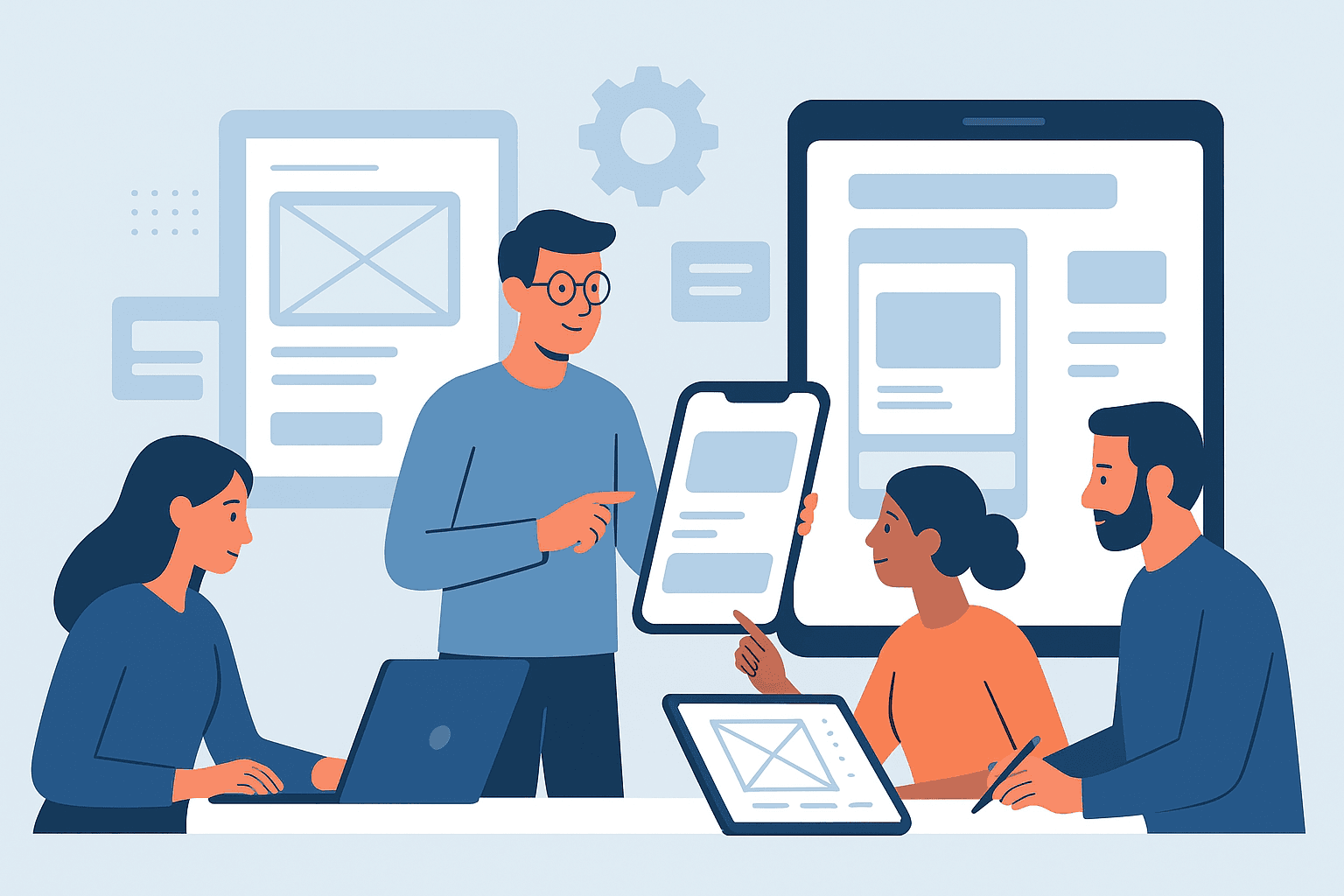
Wireframing and Prototyping
Before development begins, wireframes and prototypes help map the user journey and identify the right structure for the app. This stage makes it easier to clarify features, refine navigation, and avoid costly revisions later.
UI and UX Design
User interface and user experience design should work together. A strong app needs clear visual hierarchy, intuitive navigation, easy-to-understand interactions, and a layout that supports action without clutter or confusion.
Cross-Device Usability
A mobile app should feel polished across screen sizes, device types, and operating systems. But beyond technical compatibility, it also needs to feel comfortable and intuitive in real-world use.
A good design should never leave users wondering what to do next.
Phase 2: The Development Side of Mobile Apps
Once the design strategy is clear, development brings the product to life. This is where architecture, functionality, integrations, and performance all come into play.
There are two common approaches to mobile app development:
Native App Development
Native development uses platform-specific technologies such as Swift for iOS and Kotlin or Java for Android.
Advantages of native development include:
- strong performance
- deep access to device features
- highly optimized user experiences
- platform-specific polish
Cross-Platform App Development
Cross-platform development uses frameworks such as React Native or Flutter to support both iOS and Android from a more unified codebase.
Advantages of cross-platform development include:
- faster development timelines
- lower development overhead
- easier maintenance across platforms
- efficient delivery for many business use cases
The right approach depends on the app’s complexity, budget, performance needs, and long-term goals.
Why a CMS Can Make a Mobile App Much More Valuable
One of the most overlooked parts of business mobile app development is content management. Many companies launch an app, then realize that every small update requires a developer, a delay, or an app store bottleneck.
That is where a built-in content management system for mobile apps can create a major advantage.
A CMS-backed app can make it much easier to manage:
- text updates
- images and graphics
- videos and downloadable resources
- product content
- training materials
- learning modules
- promotional messaging
- featured content and announcements
This gives your team more control, keeps the app current, and reduces the friction of ongoing maintenance. For many businesses, that difference is what turns an app from a one-time project into a long-term tool that keeps delivering value.
Mobile App Development Best Practices
Whether you choose native or cross-platform development, there are several best practices that help determine whether an app will succeed.
Clean, Maintainable Code
Apps should be built on a structure that is scalable, maintainable, and prepared for future enhancements.
Secure Authentication and Data Handling
Security matters, especially when apps involve business resources, user accounts, protected content, or sensitive information.
Testing Across Real Conditions
Apps should be tested for usability, performance, responsiveness, and compatibility across different devices and environments.
Analytics and User Insights
Tracking user behavior helps businesses understand how the app is actually being used, what content matters most, and where improvements can be made over time.
Phase 3: Testing, Launch, and Ongoing Maintenance
A successful app launch is not the finish line. It marks the start of the app’s real life in users' hands.
Before launch, testing should confirm that the app functions smoothly across devices, interactions, and user conditions. That includes usability testing, bug testing, performance testing, and real-world review.
After launch, ongoing maintenance often includes:
- monitoring analytics
- fixing bugs
- refining features
- improving performance
- updating content
- adapting to operating system changes
- supporting new device sizes and resolutions
The best apps continue to improve after launch rather than sitting unchanged until they become outdated.
How to Choose the Right Mobile App Development Partner
Not every mobile app development company takes the same approach. If you are choosing a partner, it is worth looking beyond visual polish alone.
A strong development partner should help you think through:
- user experience
- business goals
- content structure
- maintainability
- platform strategy
- future growth
They should also understand that the best app is not always the one with the longest feature list. It is the one that solves the right problem clearly and reliably.
Frequently Asked Questions About Mobile App Design and Development
What is the difference between mobile app design and mobile app development?
Mobile app design focuses on user experience, interface, navigation, and visual structure. Mobile app development focuses on building the functionality, logic, integrations, and technical framework that make the app work.
Should I build a native app or a cross-platform app?
That depends on your goals, budget, performance needs, and feature requirements. Native apps can offer deeper optimization, while cross-platform apps can often deliver faster, more efficient development.
Why is a CMS useful in a mobile app?
A CMS lets your team manage content updates more easily without relying on developers for every change. That helps your app stay current and more useful over time.
How long does mobile app development usually take?
Timelines vary based on complexity, but a custom mobile app often takes several weeks to several months, depending on the scope, features, design needs, and review cycles.
Final Thoughts
Strong mobile app design and development is about more than launching something that looks good. It is about building an experience users actually want to use and a platform your business can continue to manage and improve over time.
When strategy, design, development, testing, and content management all work together, the result is a mobile app that does more than exist. It supports communication, sales, training, engagement, and growth.
If your company is planning a custom mobile app and wants a solution that is polished, scalable, and easier to manage after launch, Q3 Interactive can help. We build mobile apps designed for real users, real business goals, and real-world performance.